Pearsall scraps jail deal
City terminates longstanding contract over medical costs
A long-standing agreement between the city of Pearsall and Frio County reached a breaking point last week, as city officials moved to terminate a 2011 contract governing inmate housing and medical responsibilities.
The Tuesday, April 14, decision follows years of mounting tension over the financial and legal liabilities the city faces when arresting individuals.
According to the 15-year-old agreement, the city pays the county a one-time $50 rate per arrestee.
The agreement and the booking policy filed at the jail stipulate that an arrestee must be medically cleared if there are visual signs of injury or if the individual requests medical assistance. If that request comes within 24 hours of the booking, the arresting agency is responsible for the medical treatment.
The point of contention lies in the “24-hour rule” found in Section 111 of the contract. Under those terms, any individual arrested by a city police officer remains a “city prisoner for the first 24 hours or until they are arraigned.”
Pearsall City Manager Federico Reyes had suggested an amendment to the contract for jail services in a 2019 email to then-County Judge Arnulfo Luna.
The proposed changes addressed healthcare and structure of the contract language.
“Neither the city nor the county is financially responsible for indigent healthcare services for jail inmates,” the city manager wrote in a Nov. 2019 email. “We also stipulated that inmates who do not qualify for indigent healthcare services would be responsible for their own medical expenses.”
Section VII, subsection D, stipulates that the city must transport and pay for medical clearance of any injured or ill prisoners before they can be booked into the county facility within the first 24 hours.
“This letter is intended to be brief, as the city believes multiple prior efforts have been made to discuss and address our concerns regarding the current jail services contract,” the letter read. “The existing agreement imposes an undue financial burden and presents significant liabilities for our citizens.”
The dispute intensified in late 2025 during a council meeting when Reyes voiced frustrations over a lack of communication from county leadership. Reyes has long advocated for an amendment that would shift the financial burden of medical care away from the taxpayers and toward the individuals receiving care or the hospital district.
Reyes referenced two attorney general (AG) opinions provided to him by former Frio Regional Hospital CFO Thomas Grimert.
The 1996 AG opinions – DM-380 and DM-413 – suggest hospital districts are responsible for indigent care and non-indigent inmates should be held personally liable for their medical expenses.
“From a public safety standpoint, we want to carry out the law enforcement responsibility we have as a city; however from a fiscal standpoint, the current process needs improvement,” the city manager wrote in a March 2024 email to hospital CEO John Hughson.
Hughson offered a number of suggestions at that time to relieve high medical costs for inmates that included developing medical criteria to determine if inmates needed to visit the emergency room upon intake and having the medical director order specific tests and bringing those orders to the emergency room.
“I am happy to discuss negotiated rates but that is just shifting the cost burden from you to me,” Hughson wrote in the email.
Frio County Sheriff Peter Salinas has defended the existing contract, characterizing the city’s decision as a self-inflicted problem.
Salinas argued that the sheriff’s office does not bill the city for medical needs once an inmate is fully booked and that the county has already taken steps to stabilize costs.
According to the sheriff, the jail has contracted a 24-hour doctor through ReadyCare Clinic to provide sick calls and prescription services, which he says has significantly reduced unnecessary hospital transports.
“My concern with this decision is that the city of Pearsall has not shared a plan for how they will proceed forward should they no longer utilize our jail,” the sheriff said. “Ultimately, in the current agreement there is no requirement for how and where the city seeks medical attention should an arrested person require it. Some of these arrested subjects brought in are injured or in medical distress. Frio County does not bill the city a single dime for prisoners’ medical needs. If the city expects the hospital district to pay their prisoner medical bills, this is to be discussed between the city and district, or any other medical provider, not the sheriff’s office. For instance, the sheriff’s office has created policies, procedures and secured medical agreements that allow for proper medical care.
“While it does come with a cost, it is a requirement and there is no way around it,” Salinas added. “My staff studies these costs from year to year and they are budgeted accordingly based on end-of-year costs. I have reached out to city of Dilley officials and they currently have no issue with the same exact agreement the city of Pearsall has opted out of. This appears to be a self-inflicted problem by city management.”
The Texas Commission on Jail Standards requires counties to pay inmates’ medical expenses. However, the Pearsall agreement effectively bypasses this for the first 24 hours of custody.
Current standards from the Texas Department of Health and Human Services state that indigent health care programs – administered by hospital districts – are intended for residents with incomes at or below 21 percent of the federal poverty guidelines and not eligible for Medicaid.
“Frio Hospital District maintains a formal indigent care policy and follows the policy for individuals who qualify,” Hughson noted in a prepared statement this week, adding that the indigent care policy can be viewed on the hospital web page. “Under Texas law and US constitutional law, a governmental entity has a duty to provide medical care to persons in custody. The Texas statutory framework vis-à-vis Texas Code of Criminal Procedure states that in general, the entity that has custody at the time the medical services are provided is responsible for the cost. Custody status alone does not establish indigency.”
Under the current jail policy, the administration fills out indigent applications for every inmate booked, with some qualifying for up to $10,000 in care if they remain in county custody.
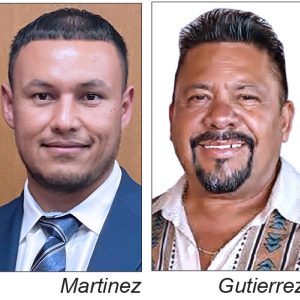
Reyes contacted Pct. 2 Commissioner Mario Martinez via email in November 2025, reiterating his concerns with the contract for jail services. Reyes said the cities of Pearsall and Dilley were the only local communities that work under the terms of a jail contract.
“It is my understanding that neither Moore nor Bigfoot have a contract for jail services,” the city manager said. “Moreover, DPS has no contract with Frio County for jail services.”
Reyes requested the formal dissolution of the agreement to take effect in early 2026, citing a need for financial transparency and effectiveness.
“In short, relying on communities in the county for additional revenue for jail operations and passing along liabilities of operating a jail dilutes the financial effectiveness and transparency of Frio County and the city of Pearsall,” the city manager said.
As the termination date approaches, questions remain over where Pearsall police will house arrestees and whether a new, mutually agreeable contract can be reached before the city is forced to seek services outside the county.
“The city welcomes a reasonable resolution to this issue,” Reyes said on Monday evening. “We have made several efforts over the course of the last few years to resolve this matter, so our hope is that this gets resolved sooner rather than later.
“The citizens of Pearsall deserve a responsive government that delivers solutions and focuses on providing the best services to our citizens,” Reyes said. “I believe the city of Pearsall and Frio County can work together to ensure that we meet the needs and expectations of the citizens of Pearsall. Public safety and jail services are no exceptions.”
“Even though Frio Hospital District is funded by taxes, those taxes are meant to support indigent care as well as other public health obligations,” the hospital administrator wrote this week. “They are not intended to subsidize other governmental entities’ obligations (like a city’s detainees). The controlling rule is still who has custody at the time of medical treatment is responsible for the cost regardless of the hospital’s funding structure.”
The city has scheduled a meeting for Thursday, April 23, to discuss disallowing payment of any Frio Hospital District medical bills for city of Pearsall arrestees and consultation with the city attorney for jail contract services.