Weekend earthquakes strike rural areas east of Pearsall, Millett
PROTECTED CONTENT
If you’re a current subscriber, log in below. If you would like to subscribe, please click the subscribe tab above.
Username and Password Help
Please enter your email and we will send you a password reset link.
 By Manuel Azocar III
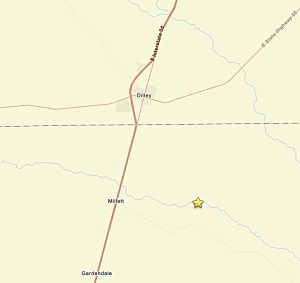
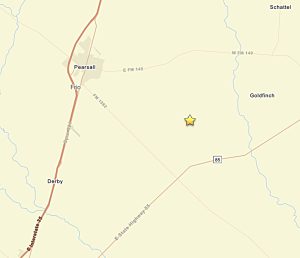
A pair of earthquakes were reported in the region Sunday afternoon, July 12 with the first registered near Pearsall and a second, stronger 3.6-magnitude earthquake was clocked outside of Dilley, according to the United States Geological Survey (USGS).
A first earthquake was reported near Pearsall at 3:11 p.m. with a magnitude of 2.8 nearly centered between Hwy 140, FM 1582 and Hwy 85 in eastern Frio County.
The USGS said the second quake happened around 3:52 p.m., approximately 7.5 miles southeast of Dilley and directly east of Millett in northern La Salle County.
The earthquake’s depth was 4.2 miles.
The earlier earthquake had a depth of six miles.
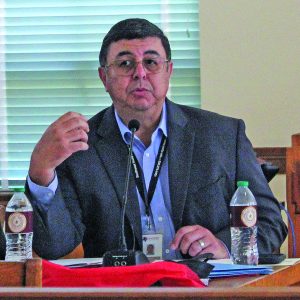
Frio County Sheriff Peter Salinas said his office has not received any reports of damage related to the events.
According to the USGS, most of North America east of the Rocky Mountains has infrequent earthquakes. Earthquakes east of the Rocky Mountains, although less frequent than in the West, are typically felt over a much broader region than earthquakes of similar magnitude in the west.
“As is the case elsewhere in the world, there is evidence that some central and eastern North America earthquakes have been triggered or caused by human activities that have altered the stress conditions in earth’s crust sufficiently to induce faulting,” the USGS said on its website. “Activities that have induced felt earthquakes in some geologic environments have included impoundment of water behind dams, injection of fluid into the earth’s crust, extraction of fluid or gas, and removal of rock in mining or quarrying operations. In much of eastern and central North America, the number of earthquakes suspected of having been induced is much smaller than the number of natural earthquakes, but in some regions, such as the south-central states of the U.S., a significant majority of recent earthquakes are thought by many seismologists to have been human-induced.
“Even within areas with many human-induced earthquakes, however, the activity that seems to induce seismicity at one location may be taking place at many other locations without inducing felt earthquakes.”